Nitrates, Reef Tanks, Saltwater
How to Lower Nitrates in a Saltwater Aquarium
02
Apr
Apr
High nitrate levels are one of the most common issues in saltwater aquariums, leading to algae blooms, stressed fish, and unhealthy corals. While some nitrate is normal, maintaining low levels (typically <10 ppm for fish-only, <2–5 ppm for reef tanks) is essential for long-term stability. This guide provides practical, proven strategies to reduce and control nitrates effectively.
Core Principles
- Input vs. Output Balance: Nitrates accumulate when waste input (food, bioload) exceeds export mechanisms.
- Biological Filtration: Beneficial bacteria convert ammonia → nitrite → nitrate.
- Export Is Key: Since nitrate is the end product, it must be removed manually or biologically.
- Consistency Over Intensity: Small, regular interventions outperform occasional drastic changes.
Most Powerful Methods
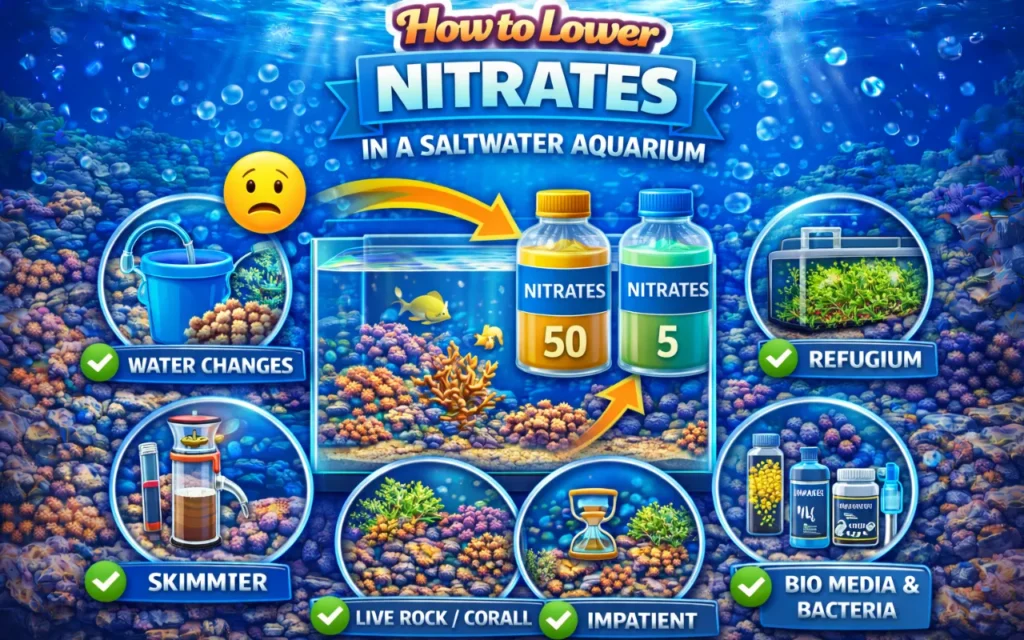
1. Water Changes
- Replace 10–25% of tank water weekly or biweekly.
- Use high-quality RO/DI water to avoid introducing new nitrates.
- Immediate and reliable nitrate reduction.
2. Reduce Overfeeding
- Feed only what fish consume within 1–2 minutes.
- Rinse frozen foods to remove excess nutrients.
3. Improve Filtration
- Clean mechanical filters (sponges, socks) every few days.
- Avoid detritus buildup—this is a major nitrate source.
4. Protein Skimming
- A properly tuned skimmer removes organic waste before it becomes nitrate.
- Aim for consistent dark skimmate production.
Advanced Strategies
1. Refugium with Macroalgae
- Grow macroalgae like Chaetomorpha to absorb nitrates.
- Harvest regularly to export nutrients.
2. Deep Sand Beds / Live Rock
- Promote anaerobic bacteria that convert nitrate into nitrogen gas.
- Works best in mature, stable systems.
3. Carbon Dosing (Advanced)
- Add controlled carbon sources (e.g., vodka, vinegar).
- Encourages bacteria to consume nitrates.
- Requires careful monitoring to avoid oxygen depletion.
4. Denitrifying Media
- Use specialised media (e.g., bio-pellets, ceramic blocks).
- Enhances nitrate-processing bacteria populations.
Daily, Weekly, Monthly Routine
Daily
- Observe feeding habits and avoid overfeeding.
- Check for uneaten food or debris.
Weekly
- Perform water change (10–20%).
- Clean filter socks/media.
- Test nitrate levels.
Monthly
- Deep clean sump and equipment.
- Trim/refuge macroalgae.
- Reassess stocking levels.
Obstacle Mastery
Problem: Nitrates Won’t Drop
- Cause: Hidden detritus (substrate, rocks, sump).
- Solution: Use a siphon or turkey baster to remove buildup.
Problem: Nitrates Drop Then Rise Again
- Cause: Inconsistent maintenance.
- Solution: Stick to a routine schedule.
Problem: Coral Stress During Reduction
- Cause: Rapid nitrate changes.
- Solution: Lower levels gradually over weeks.
Acceleration Factors
- Increase flow to prevent waste settling.
- Use multiple export methods simultaneously (e.g., skimmer + refugium).
- Maintain a balanced stocking level—avoid overcrowding.
- Upgrade filtration if the tank is heavily stocked.
Tracking & Measurement
- Use reliable test kits (liquid tests preferred over strips).
- Track weekly readings to identify trends.
- Target:
- Fish-only tanks: <20 ppm
- Reef tanks: 0.2–5 ppm
Specialised Applications
Reef Tanks
- Require ultra-low nitrates.
- Combine refugium, skimming, and light carbon dosing.
Fish-Only Systems
- More tolerant but still benefit from <20 ppm.
- Focus on water changes and feeding control.
Nano Tanks
- Nitrates spike quickly.
- Perform smaller, more frequent water changes.
Evidence-Based Practices
- Protein skimming and water changes are consistently proven as primary export methods.
- Macroalgae refugiums are widely used in reef systems for natural nutrient control.
- Carbon dosing is effective but should only be used with careful monitoring.
Recommended Resources
- Reef aquarium forums and communities for real-world setups
- Manufacturer guides for skimmers and filtration systems
- Water testing manuals for accurate measurement techniques
Lowering nitrates isn’t about a single fix—it’s about creating a balanced system where nutrient input is consistently matched by effective export. By combining routine maintenance, smart feeding, and advanced filtration techniques, you can maintain a stable, healthy saltwater aquarium with minimal nitrate issues.
